

Topline & Muscle
Amino-MAX
Amino acids for topline, muscle, and a stronger frame under saddle.
$176.94

Amino-MAX begins delivering amino acids within the first hour. After feeding, circulating amino acid availability rises quickly, with lysine reaching peak plasma concentration at about 60 minutes in horses.1 That is why, on work days, the second pump should be given about an hour before you ride, so the amino acids are available when your horse’s muscles need them most.
Amino-MAX delivers a 15,250 mg blend per ounce with twelve essential and nonessential amino acids in liquid form. A horse has no dedicated amino acid reserve to draw from. When his diet does not provide what the work demands, his body must obtain those amino acids from its own proteins, including skeletal muscle. Feeding before work provides an outside source instead.
The first change happens within about 60 minutes. The visible change comes next. Most owners begin seeing improved topline and muscle definition within 14 to 21 days. Muscle is rebuilt on a training clock, not overnight, and gains can continue building through 180 days of consistent feeding and work.
1Bockisch, F., Taubert, J., Coenen, M., & Vervuert, I. (2023). Protein evaluation of feedstuffs for horses. Animals, 13(16), 2624. doi.org/10.3390/ani13162624Topline & MuscleRecoveryPerformance
Muscle tissue is built from protein, and protein is built from amino acids. Amino-MAX supplies a concentrated blend of essential and nonessential amino acids to support protein nutrition, muscle maintenance, and recovery around training, competition, and hauling.
One pump is one ounce and carries 15,250 mg of that blend, delivered in a proprietary liquid form with up to 99% availability1, 2. Powders & pellets must first break apart, hydrate, & disperse into usable surface area inside a moving gut, a slow, variable process that leaves availability as low as 2.5%3.
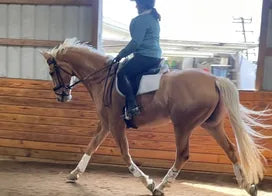
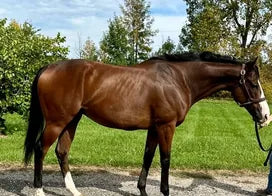
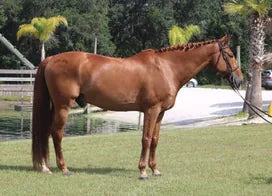
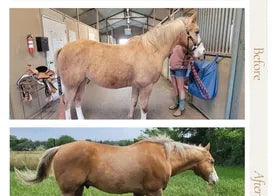
Every discipline. Every level. Real horses on Dr. Peterson’s Protocol.
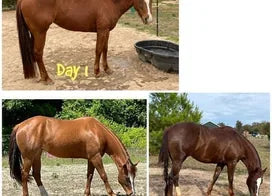
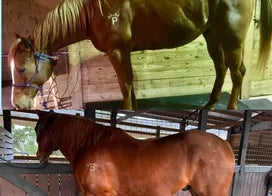
Same mare, 30 days apart. One pump a day.
Shot on the first day of the protocol and again on day 30. One pump of Amino-MAX a day in between.
Day 1. The day the protocol started.
Day 30. Same mare, 30 days of daily feeding.
Most amino acid supplements are powders or pellets. They have to dissolve and survive the gut before any of it counts, and most of it never does. Amino-MAX is liquid and pre-dispersed, so it’s ready the moment it reaches the gut wall.
Oral bioavailability of administered actives. Powder/pellet figure per Du et al. (2004)1; cited in full above.
With most supplements, you pay for a full dose and your horse absorbs a fraction of it. You’re not getting what you think you’re paying for. With Amino-MAX, what’s on the label is what reaches your horse.
Already in solution. The amino acids arrive in the form muscle can actually use, with no dispersion step in between.
High molecular weight, pre-hydrated. No breakdown step to lose it in, which matters for a molecule this large.
It’s not marketing. Liquid delivery has been the standard in human medicine for decades. Amino-MAX brings it to the barn.
The actives aren’t the differentiator, delivery is. Here’s how liquid stacks up against the pelleted and powdered joint supplements in most feed rooms.
One pump is one ounce. All twelve amino acids in the blend are named below, in panel order. Equine studies show that amino acid balance, especially adequate lysine and threonine, can influence nitrogen metabolism, plasma amino acid availability, and maintenance of muscle mass.
Amino-MAX is delivered in a proprietary liquid form with up to 99% availability1, 2. Powders & pellets must first break apart, hydrate, & disperse into usable surface area inside a moving gut, a slow, variable process that leaves availability as low as 2.5%3. Amino-MAX arrives dispersed, at the correct particle size, suspended and ready on contact, so the gut isn’t left to solve dispersion problems it was never designed to solve.
One pump is one ounce and supplies 15,250 mg of a proprietary amino acid blend: twelve amino acids, every one of them named on the panel. Individual amounts stay proprietary.
Supplies glycine, which contributes to the amino acid pool used for protein synthesis and normal tissue maintenance, carried on magnesium.4–6, 12, 15, 16, 19, 20
An essential amino acid: it must come from the diet. Histidine supplies substrates used in protein synthesis and muscle maintenance.4–19
Arginine contributes to the horse’s total amino acid supply and participates in amino acid and nitrogen metabolism.5, 6, 9–20
A protein-forming amino acid that contributes to the horse’s total amino acid supply.4–6, 19
Glutamine adds to that same supply. Equine studies show dietary protein balance and feeding timing can alter circulating and muscle amino acid profiles.5, 6, 9–20
An essential amino acid, and with threonine one of the two most often evaluated in horse diets. Equine studies in exercising, growing, mature, and aged horses link balanced intake with nitrogen metabolism, plasma amino acid responses, whole-body protein metabolism, and maintenance of muscle mass.4–19
Ornithine contributes to the horse’s total amino acid supply and participates in amino acid and nitrogen metabolism.5, 6, 9–20
An essential amino acid: it must come from the diet. Phenylalanine supplies substrates used in protein synthesis and muscle maintenance.4–19
Proline contributes to the same amino acid pool, drawn on for protein synthesis and normal tissue maintenance.4–6, 12, 15, 16, 19, 20
An essential amino acid, and with lysine one of the two most often evaluated in horse diets. Equine studies link balanced intake with nitrogen metabolism, plasma amino acid responses, and whole-body protein metabolism.4–19
An essential amino acid and a branched-chain amino acid. Equine studies show that plasma and muscle amino acid concentrations respond to dietary amino acid balance and feeding conditions.4–20
Serine rounds out that pool, alongside glycine and proline, for protein synthesis and normal tissue maintenance.4–6, 12, 15, 16, 19, 20
One pump a day, every day. On work days, competition days, and hauling days, give two.
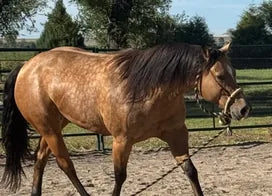
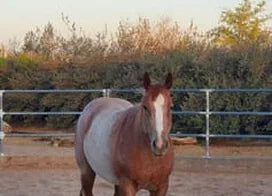
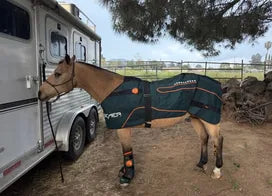
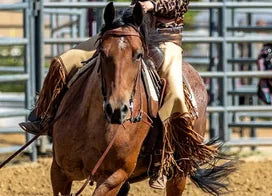
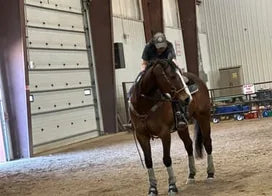
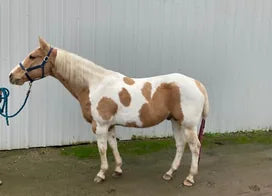
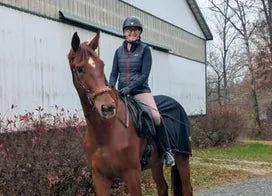
Real members, real horses, real results. Tag #100XEquine to be featured.
 2
2 4
4 4
4 3
3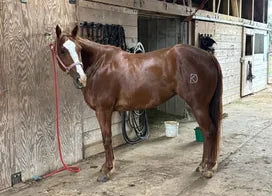
 2
2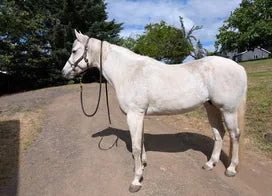
 5
5 2
2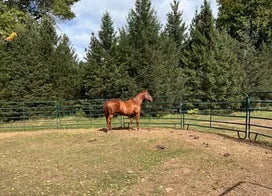
 2
2 2
2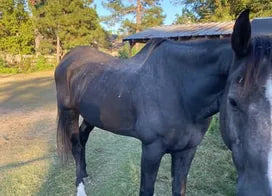
 2
2 2
2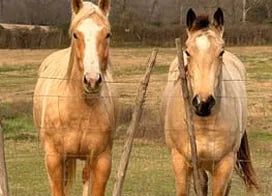
 3
3 2
2 2
2 2
2 2
2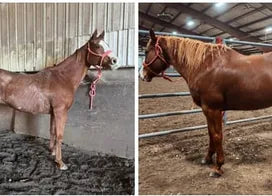
 4
4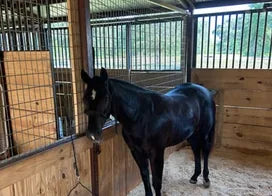

 2
2
The Veterinary Standard Behind 100X Equine
Dr. Russ Peterson, DVM, MS, DACVSMR, Cert. ISELP brings nearly five decades of equine medicine, sport horse performance, rehabilitation, nutrition, and clinical decision-making to 100X Equine.
As Chief Veterinary Officer, Dr. Peterson helps guide the clinical thinking behind every 100X Equine formula, from ingredient selection to dosing strategy to how those actives are delivered inside the horse.
Amino-MAX reflects that standard: twelve amino acids, every one of them named on the panel, delivered in a proprietary liquid carrier built to keep them stable and ready for biological contact.
Muscle is built, broken down, and rebuilt out of amino acids. Amino-MAX supplies twelve of them, essential and nonessential, in one daily ounce.
Muscle tissue is built from protein, and protein is built from amino acids. Fed daily, the blend supports protein nutrition and the maintenance of muscle mass.
Equine studies link balanced lysine and threonine intake with nitrogen metabolism and whole-body protein metabolism, in exercising, growing, mature, and aged horses alike.
Equine work on feeding timing links a protein and amino acid supply around exercise with nitrogen balance and plasma amino acid response through recovery. Given an hour before work, competition, or hauling.
Amounts are per one-ounce pump, as listed on the current Product Facts panel. See the full panel.
No prohibited substances. Amino-MAX is USEF and FEI compliant, so it stays legal for horses competing under both rule sets.
Feed it daily for 90 days. If you don’t see the difference, we refund you, with free shipping on every order.
Put any protocol on auto-delivery and lock in a better price on every order. Pause, skip, swap, or change your delivery dates anytime, fully in your control.
Amino-MAX begins delivering amino acids within the first hour. After feeding, circulating amino acid availability rises quickly, with lysine reaching peak plasma concentration at about 60 minutes in horses.1 That is why, on work days, the second pump should be given about an hour before you ride, so the amino acids are available when your horse’s muscles need them most.
Amino-MAX delivers a 15,250 mg blend per ounce with twelve essential and nonessential amino acids in liquid form. A horse has no dedicated amino acid reserve to draw from. When his diet does not provide what the work demands, his body must obtain those amino acids from its own proteins, including skeletal muscle. Feeding before work provides an outside source instead.
The first change happens within about 60 minutes. The visible change comes next. Most owners begin seeing improved topline and muscle definition within 14 to 21 days. Muscle is rebuilt on a training clock, not overnight, and gains can continue building through 180 days of consistent feeding and work.
1Bockisch, F., Taubert, J., Coenen, M., & Vervuert, I. (2023). Protein evaluation of feedstuffs for horses. Animals, 13(16), 2624. doi.org/10.3390/ani13162624Stack more and save up to 40% off. Adjust anytime.
Amino acids for topline, muscle, and a stronger frame under saddle.
Bone density, joint integrity, and recovery for hard-working and aging horses.
Liquid gut health and immune support, the foundation every other protocol builds on.
Everyday joint flexibility and comfort for performance and senior horses.
Electrolyte and hydration support for sweat, travel, and hot, hard days.
Liquid calming support for focus and rideability, without the dullness.
Start with Amino-MAX. Lean muscle, repair, and recovery support in one pump a day, built on Dr. Peterson’s 47+ years of equine medicine.
Start with Amino-MAXFeed it daily for 90 days. If you don’t see the difference,
we refund you.
90 day returns on every order. Keep feeding it, tell us it did not work, and we send the money back.


One pump is one ounce. Twelve amino acids, every one of them named, with the individual amounts proprietary.

Essential amino acids for topline, muscle development and recovery. Liquid, so the dose is the same every day.
$1.11/day
Save up to 46% Today
FREE delivery —. Order within —
The blend is proprietary by ratio and every one of its twelve amino acids is named on the panel. The total is stated to the milligram, with the peer-reviewed work behind it listed below.
One pump a day, adjusted by body weight. One pump is one ounce and 15,250 mg of amino acids.
Topline change is visible on most horses within 14 to 21 days of consistent feeding, and keeps building through 180 days.
The actives are not the differentiator, delivery is. Here is how liquid stacks up against the dry supplements in most feed rooms.
Amino-MAX is delivered in a proprietary liquid form with up to 99% availability1,2. Powders and pellets must first break apart, hydrate and disperse into usable surface area inside a moving gut, a slow, variable process that leaves availability as low as 2.5%3.
One pump is one ounce. The blend is proprietary by ratio, which is normal, but every amino acid in it is printed on the panel, which is not.

Nearly five decades of equine medicine, sport horse performance, rehabilitation and nutrition. Amino-MAX reflects that standard: a named amino acid profile rather than an unnamed blend, a stated total, and a liquid carrier built to keep the dose the same every day.
One pump a day. Feed it for 90 days, and if your horse is not doing better, we refund you.
Subscribe & SaveFree shipping. Pause, change or cancel anytime.